Quick Executive Summary: In northern Illinois and the greater Chicagoland area (including Aurora, Naperville, and Oswego), homeowners should schedule their sprinkler blowout between late September and early November. Sub-freezing overnight temperatures typically begin in mid-to-late October. Because trapped water expands by 9% when freezing, delaying winterization risks cracked PVC/poly lines, ruptured solenoid valves, and destroyed brass RPZ backflow preventers. Secure your spot on a consolidated neighborhood route with Montoya Irrigation before the ground freezes solid.
Illinois winters are notorious for sustained sub-zero temperatures and deep soil freezes. When nighttime temperatures dip below 32°F (0°C), any water remaining inside your underground sprinkler pipes, manifolds, and spray assemblies begins to freeze.
Because ice occupies roughly 9% more volume than liquid water, the expanding ice exerts thousands of pounds of hydrostatic pressure against the walls of PVC and polyethylene pipes. Without proper compressed air purging, this pressure results in shattered pipe joints, fractured valve housings, and ruined backflow assemblies that remain hidden until you turn your water on the following spring.
The Chicagoland Frost Timeline: When Do Pipes Actually Freeze?
Understanding local weather patterns is essential for scheduling your system blowout before irreversible damage occurs:
1. Late September to Early October: The Preparation Window
Nighttime temperatures start hovering in the 40s and high 30s. Grass growth slows down significantly. This is the optimal time to schedule your blowout service to ensure you are on the service route before peak demand hits.
2. Mid-to-Late October: First Light Frosts
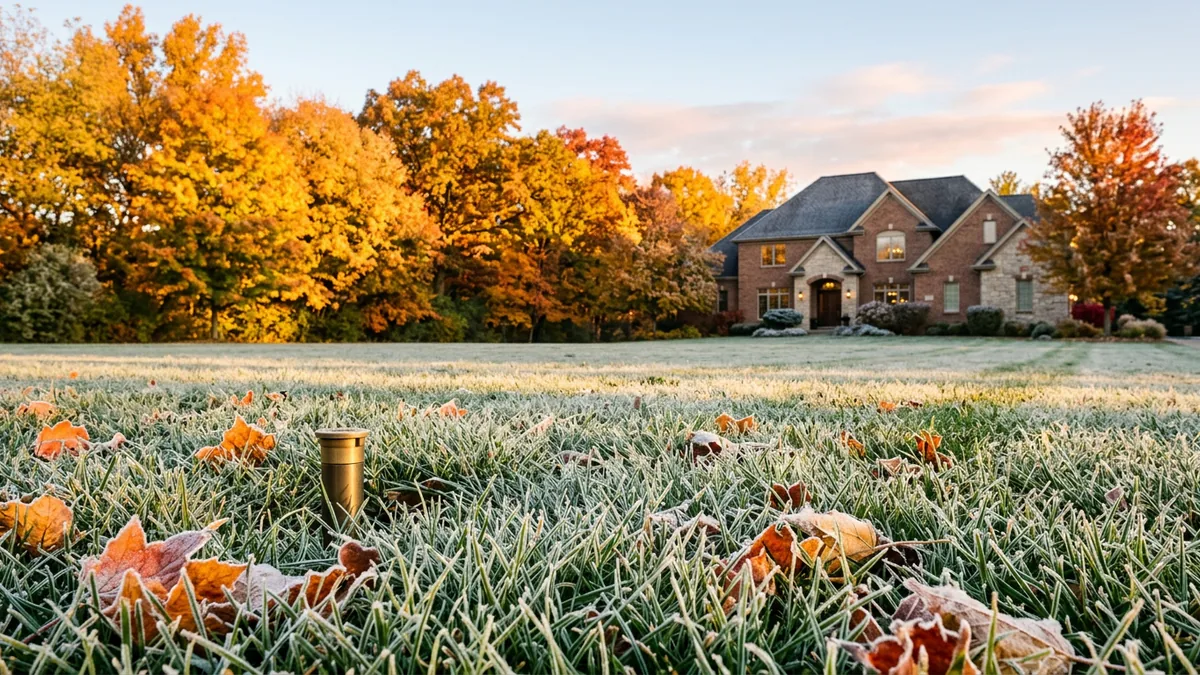
Chicagoland typically experiences its first overnight ground frosts (30°F to 32°F) during this window. While brief overnight frosts may not instantly freeze deeply buried poly lines, they immediately threaten exposed outdoor plumbing, including copper backflow preventers (RPZ valves) and above-ground shutoffs.
3. Early to Mid-November: The Hard Freeze Deadline
Sustained hard freezes (temperatures dropping below 28°F for more than 4 consecutive hours) begin penetrating the topsoil. Running your sprinkler system past this point is extremely risky. All systems in Aurora and Naperville, IL should be 100% winterized by the first week of November.
What Happens Inside Un-Winterized Sprinkler Systems?
The damage caused by trapped moisture is rarely limited to a single cracked head:
- Ruptured Polyethylene Lines: Lateral lines buried 8 to 12 inches beneath your turf will split along their seams when water freezes solid, creating invisible underground leaks.
- Cracked Backflow Preventers (RPZ Assemblies): The heavy brass casting of an RPZ valve is brittle under freeze expansion. Replacing a freeze-shattered backflow valve costs between $600 and $1,200.
- Cracked Solenoid Manifolds: Valve boxes collect standing water. When ice expands around plastic manifolds, it fractures the valve threads, causing continuous basement leaks when the main supply is reopened.
- Blown Out Sprinkler Seals: Ice pushes internal wiper seals out of pop-up spray bodies, preventing heads from retracting flush with your lawn and leaving them vulnerable to lawnmower strikes.
Related Winterization Resources
- Pricing Breakdown: Review current residential rates by zone count in our Sprinkler Blowout Cost Guide for Aurora & Naperville.
- Air Compressor Physics: Learn why standard garage air tanks fail in Why Shop Compressors Fail at Sprinkler Blowouts.
Winterization Decision Matrix: DIY Risk vs. Professional Blowout
| Feature / Criteria | Waiting Too Long (Post-Frost) | DIY Garden Hose Drain | Professional High-CFM Blowout (Montoya) |
|---|---|---|---|
| Moisture Evacuated | 0% (High rupture risk) | 20–40% (Trapped water in low zones) | 100% Total Evacuation |
| Compressor CFM | N/A | 3–6 CFM (Shop compressor) | 50–100+ Commercial CFM |
| RPZ Valve Isolation | At risk of freeze-burst | Manual drain only (Often incomplete) | Inspected, isolated & drained |
| Spring Repair Cost | $500 to $2,500+ | $300 to $1,200 | $0 Guaranteed |
| Scheduling Ease | Scrambling during freeze emergency | Tedious and uncertain | Convenient consolidated route booking |
4 Steps to Prepare Your Home Before the Blowout Technician Arrives
To ensure a smooth, rapid blowout service, homeowners should complete these quick preparatory steps:
- Locate Your Indoor Shutoff Valve: Find the main sprinkler isolation valve in your basement or utility room (usually near the water meter) and turn it off completely.
- Clear Access to the Backflow Preventer: Ensure the outdoor RPZ valve assembly along your foundation is unobstructed by brush, hoses, or patio furniture.
- Turn Controller to ‘Off’ or ‘Rain Pause’: Adjust your smart Wi-Fi timer or garage control box to standby mode so it does not trigger automated cycles after air purging.
- Ensure Outdoor Hose Bibbs are Disconnected: Remove all attached garden hoses from exterior spigots to allow outdoor lines to drain naturally.
Schedule your winter blowout early with Montoya Irrigation to guarantee your system is completely protected across Aurora, Naperville, Oswego, and Plainfield, IL.
Frequently Asked Questions
What date should I turn off my sprinkler system in Illinois?
We advise shutting down irrigation schedules and isolating your indoor supply valve by October 15th to October 31st across the Chicago metropolitan area.
Can I just use the manual drain valves on my backflow preventer?
Manual drain petcocks only drain water from the brass backflow body itself. They cannot evacuate water from hundreds of feet of buried lateral pipes, which require commercial compressed air volume to push moisture out of sprinkler heads.
How much does a professional sprinkler winterization cost?
Standard residential winter blowouts in Aurora and Naperville cost between $80 and $120 for up to 6–8 zones, compared to $500–$2,500 in spring repair bills if lines freeze and burst.
💡 Related Local Guides: Facing frozen line damage or standing water? Explore our Aurora Sprinkler Repair Service, Naperville Sprinkler Repair, and Custom French Drain Installation in Naperville.